What Not to Miss in Oslo
The Opera House
You walk up the outside of it. Every tour stops here and most of them stop at the bottom of the slope, because getting a group back down off a roof costs ten minutes. Go up yourself afterwards. It is the one building in Oslo that rewards being alone on it.
Akershus Fortress
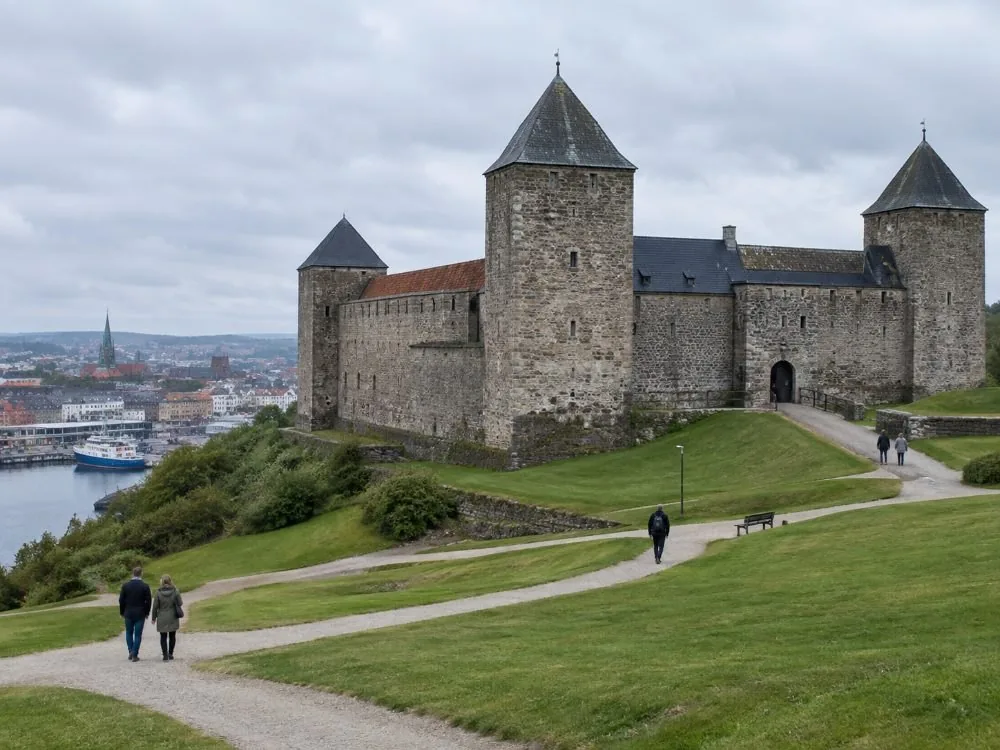
The grounds are free to walk through and open daily, which is exactly why every walking tour passes them and none of them goes inside the castle. The interior is a separate paid ticket and a separate visit. If you do one thing off your own back in Oslo, do the walls at the fortress after a guide has told you what happened there.
Christiania Torv and Kvadraturen
The grid-plan old town, with Christiania Torv as its square. This is the part of the route that means least without commentary, which makes it the strongest argument for a guide in the whole city. Left alone you will walk through it in four minutes and remember nothing.
Karl Johans gate and the Parliament
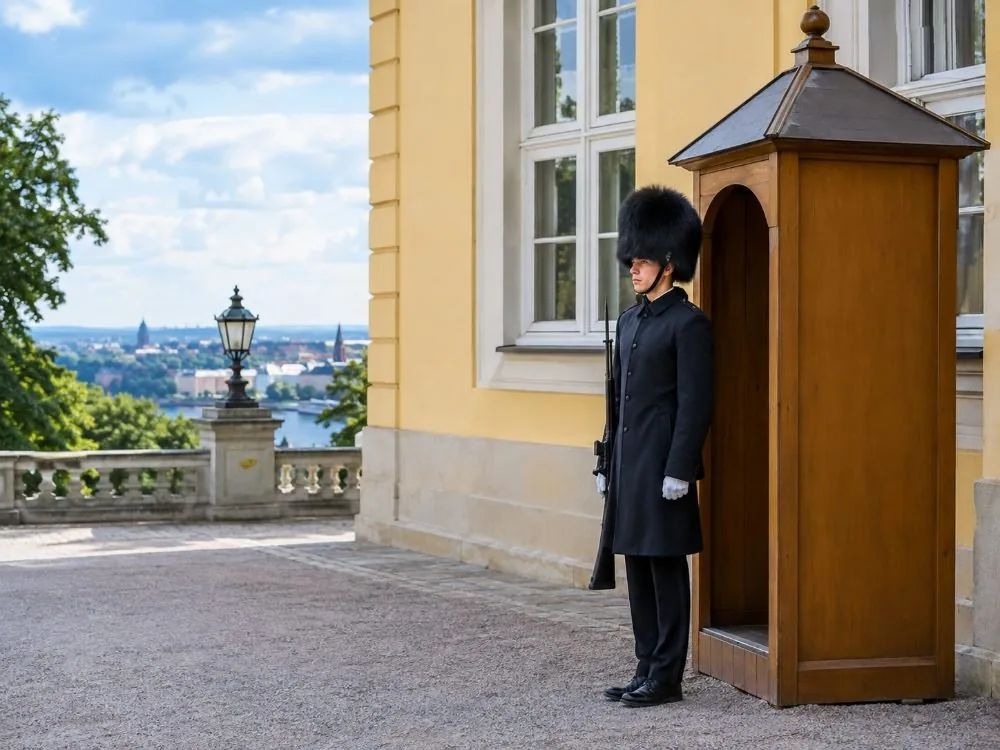
The main street, named in 1852 after the recently deceased king Charles III John, who also reigned as Charles XIV John of Sweden. Its western section, built in the 1840s, runs up to the Royal Palace, where an equestrian statue of the king by Brynjulf Bergslien was erected in 1875. The Parliament building, completed in 1866, sits at the junction where two formerly separate streets were joined into one. More on the street.
Oslo City Hall and Fridtjof Nansens plass
The pivot of the route, and the meeting point for the Myths & Legends evening walk, which is for ages thirteen and over and not wheelchair accessible. Also the windiest square in central Oslo, which is worth knowing in either direction: dress for it in winter, and enjoy it in July.
The Nobel Peace Center and Aker Brygge
Both on the waterfront, both on several of the six itineraries, and the Nobel Peace Center is the meeting point for the City Highlights walk, which is guided in German. Aker Brygge is where most people end up eating.
The single most underrated thing on this route is the Oslo Stock Exchange, which appears as a named stop only on the ninety-minute City Center walk. Nobody puts it on a list of things to see and it takes ninety seconds to walk past, but it is the stop where a good guide can explain what Kvadraturen actually did for a living.
The one thing off the line
Vigeland Sculpture Park. It is not within walking distance of the route, it needs a tram, and exactly one of the six walks reaches it — the independent guide’s walk, at the long end of its range, with tram tickets included and a cap of ten guests. Everything else in this article is inside that kilometre. Where it fits in a day.
What works
- Nearly every famous sight sits on one walkable kilometre
- The fortress grounds are free and open daily
- A guided walk covers the whole list in under two hours
- Kvadraturen is the part that genuinely needs explaining
Worth knowing
- No walking tour goes inside the fortress castle
- Vigeland needs a tram and is not on the walking route
- The route is the same on four of the six tours, so do not book two
- Aker Brygge is the least historical stop and the busiest
The walk that covers the whole list
Two hours in English from the bronze tiger at Jernbanetorget: the Opera House, Christiania Torv, Akershus, the City Hall, Oslo Cathedral, Karl Johans gate, Aker Brygge, the Parliament and the Royal Palace, with tips listed as included. Compare it with the other five.
Frequently asked questions
What should I not miss in Oslo?
The Opera House, Christiania Torv and Kvadraturen, Akershus Fortress, Oslo City Hall, Aker Brygge, Karl Johans gate, the Parliament and the Royal Palace — all on one kilometre of central street. Off that line, Vigeland Sculpture Park, by tram. The whole route in order.
Is Akershus Fortress free?
The grounds are free to walk through and open daily, which is why every walking tour includes them. Going inside the castle is a separate paid ticket and a separate visit, and no walking tour covers it. What a walking visit actually involves.
Do I need a guide to see these things?
No, and the route is short enough to walk alone. What a guide adds is the explanation, particularly in Kvadraturen, where the story is invisible without one. Walking Oslo without a guide.