Five things to know before you book
- Four of the six walk the same kilometre. The Opera House, Kvadraturen and Christiania Torv, Akershus Fortress, the City Hall, Karl Johans gate, the Parliament, the Royal Palace. The route is not what you are choosing between. The six, side by side.
- One of them is guided in German only. Oslo: City Highlights Walking Tour, guided in German, carries an English title that looks almost identical to the English walks beside it, and people book it by mistake. Which walks run in German.
- The most-reviewed walk lists tips under “includes”. Nothing is expected at the end of that one, which is worth knowing before you spend the walk wondering. What tipping a guide means in Norway.
- The free walks are not sold on the platform we link to. We cannot book you one and do not pretend otherwise. You reserve those direct with the operator, and pay the guide at the end. The free walk, explained properly.
- Two walks meet in different places depending on the language you booked. Getting that wrong means standing in the right city at the right time and missing the walk entirely. All five starting points.
What a booked walk covers, and what it does not
Two lists, drawn from what the six listings themselves state. The gap between them is where most of the disappointment on a walking tour comes from, and it is almost never about the route.
Stated as included
- A guide, for the whole of the advertised time. That is the entire product on the shortest of the six, which runs ninety minutes and says plainly that entry tickets to anything are excluded. What the extra time buys you
- Tips, on the most-reviewed walk of the six — listed under “includes”, so nothing is expected at the end. The end-of-walk question
- Hotel pickup and drop-off on two of them: the after-dark walk, and the one that caps at ten guests. Where the others meet instead
- On the most bundled of the six, a sightseeing app, public transport tickets and entry to attractions — more included than anything else here, and more moving parts. Apps, audio and the self-guided option
Not included, or not on offer
- The inside of Akershus Castle. The fortress grounds are free to walk through and open daily, which is why every walk passes them, but going into the castle is a separate ticket and a separate visit. What the route does cover
- Food and drink, on the after-dark walk and on the ten-guest walk, both of which exclude them explicitly. Eating on and near the route
- A tip-based walk. None of the six is one, and the platform does not sell them. Whether the free model is worth it
- Step-free access, on two of the six. The after-dark walk and the ten-guest walk both state that they are not suitable for people with mobility impairments and not wheelchair accessible. What each listing states
The kilometre all of them walk, in order
Ten stops, station to palace, and why each one is on every itinerary.
This is the line four of the six follow almost exactly, and the fifth follows in German. The after-dark walk covers a good deal of it too, but tells it as folklore and crime rather than architecture. Read the list and you will see the problem the listings create: six titles, one route. What changes is who is talking, for how long, and to how many of you.
- Jernbanetorget and the tiger — The square outside Oslo Central Station, and the bronze tiger standing in it. Oslo’s nickname is Tigerstaden, the Tiger City, probably taken from an 1870 poem by Bjørnstjerne Bjørnson about what was then Christiania. Two of the six meet at this animal, which is why you will see several groups forming around it at once. Finding the right one.
- The Opera House — The white slab on the water at Bjørvika, and the one stop on the route you can walk up the outside of. Every one of the six passes it, and it is usually the first thing a guide stops at long enough for photographs.
- Christiania Torv and Kvadraturen — The square at the heart of Kvadraturen, the grid-plan old town, and the oldest-feeling few streets on the walk. This is the stretch where a guide is genuinely worth having: there is very little signage here and the story is not obvious from the buildings.
- Akershus Fortress — The grounds are free to walk through and open daily, which is exactly why every walking tour in this city goes through them. Going inside the castle is a separate paid ticket and none of the six includes it. What a guide adds here.
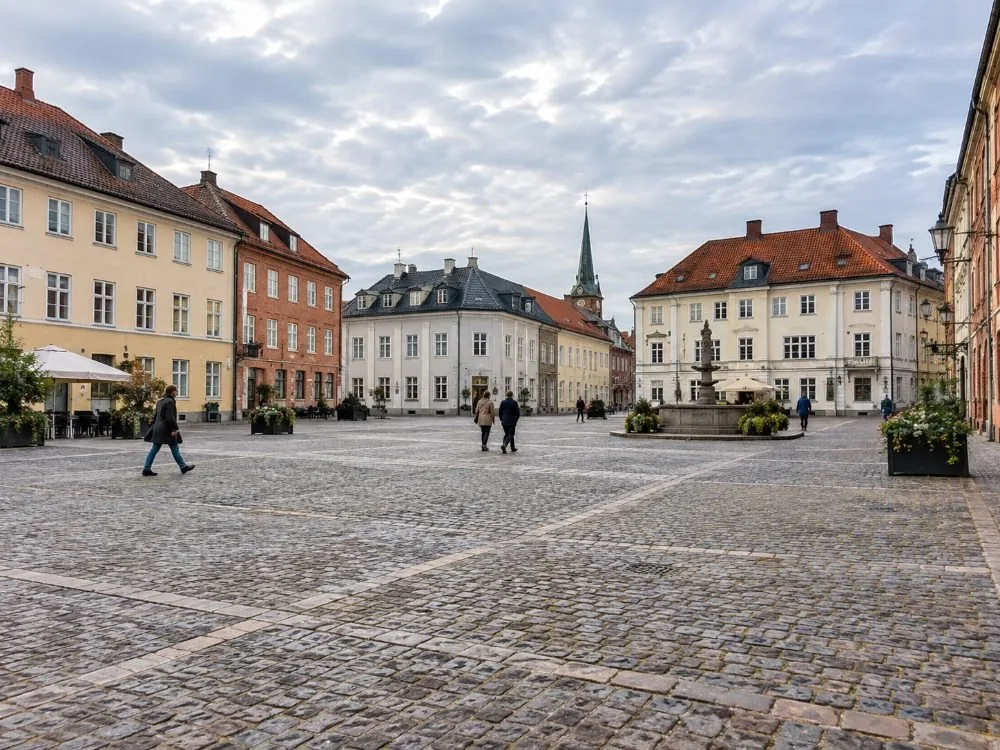
- The City Hall and Fridtjof Nansens plass — The brick twin towers, and the square in front of them with the swan fountain by the entrance, where the after-dark walk meets. In February the wind comes off the fjord and straight across this square; it is the coldest standing-still place on the whole route. Dress for the standing, not the walking.
- Aker Brygge — The waterfront strip west of the City Hall, on four of the six itineraries. It is the part of the walk where groups start to spread out, because everybody stops to look at the water.
- Karl Johans gate — The main street, named in 1852 after the recently deceased king Charles III John, who also reigned as Charles XIV John of Sweden. Its western section, built in the 1840s, runs to the Royal Palace. The street on its own.
- The Parliament — Completed in 1866, at the junction where two formerly separate streets were joined into one. The shortest of the six finishes here rather than at the palace, which is worth knowing if you had pictured ending at the gates.
- The University Aula — At Karl Johans gate 47, by the P.A. Munch statue — a stop on some itineraries and a meeting point on another, because the English departure of one walk forms up here while its German departure forms up at the Nobel Peace Center. Same listing, two different squares.
- The Royal Palace — The top of the hill and the end of the line for most of the six. An equestrian statue of the king the street is named after was put up in front of it in 1875. The guard stands outside; the palace itself is not part of any of these walks.
End to end that is roughly a kilometre, which is the honest awkwardness at the centre of this whole business: it is a short, dense, genuinely rewarding walk, and it is also a walk you could do alone with a map in an afternoon. The case for paying somebody is the commentary, not the transport. The route in full detail, and what it looks like without a guide.
How booking through this site works
Decide which product you are actually after
If what you want is the tip-based walk, book it direct with the operator and stop reading the rest of this page; we cannot sell you one and we are not going to pretend we can. If you want a fixed-price walk with a confirmed place and a stated finish time, that is what the six below are, and the difference between them is language, length, group size and meeting point rather than route.
Check the language before anything else
One of the six runs in German only under an English title, and two more run in either language but meet in different places depending on which you booked. This is the single most common way to lose a walking tour in Oslo: not turning up late, but turning up in the wrong square for the language on your voucher.
Read the limits, not the highlights
The after-dark walk is for ages 13 and over and states that it is not suitable for people with mobility impairments and not wheelchair accessible. The ten-guest walk states the same accessibility limit. The most-reviewed walk does not permit pets other than service dogs, bikes, alcohol, professional cameras, recording, or party and stag and hen groups. These are the lines people skip and then argue about at the meeting point.
Check live dates below
Availability comes straight from GetYourGuide with instant confirmation. We take no bookings and issue no tickets of any kind. We are an independent guide — not the operator of any of these walks, and not connected to the companies that run them.
Three of the six, where they differ
| Start hereOslo: Guided Walking Tour of Central Oslo with Local Guide | Oslo: Historic Myths & Legends Evening Walking Tour | Oslo: City Walking Tour with Passionate Independent Guide | |
|---|---|---|---|
| Evidence behind it | By far the largest review sample of the six | A large review sample | A small sample behind a perfect score |
| Guided in | English | English | English or German |
| How long it lasts | 2 hours | 2 hours | 135 min to 3.5 hours |
| Group size | Not stated. Private groups available | Not stated | Maximum ten. Shared or private, your choice |
| Where it meets | Jernbanetorget, by the bronze tiger outside Oslo Central Station | The swan fountain by the entrance to Oslo City Hall, on Fridtjof Nansens plass | The Skapning fra Iddefjord sculpture outside the Deichman Bjørvika library |
| What the material is | The classic route told as history and architecture | The only genuinely different one. The same streets after dark, told as folklore, Viking belief and crime | The classic route, plus Vigeland Sculpture Park by tram if you take that option |
| Age limit | None stated | 13 and over only | None stated |
| Accessibility | Not stated on the listing | Not suitable for people with mobility impairments, and not wheelchair accessible | Not suitable for mobility impairments or wheelchair users |
| The tip question | Tips are listed under “includes” — nothing expected at the end | All taxes included; food and drink excluded | Hotel pickup and drop-off included, and tram tickets with the Vigeland option |
| Book it if | You want the walk the most people have actually rated, and no ambiguity about the end | You have already done a daytime walk, or you want the one that is not about buildings | You want a small group, or a private one, and you can manage a longer walk |
| The thing to check | That the rules suit you — no pets bar service dogs, bikes, alcohol, professional cameras or recording | The age floor and the accessibility note, and that a June evening here is broad daylight | Which language you booked, and that the size of the sample behind the score is one you are comfortable with |
| Book this → | Book this → | Book this → |
Photo Gallery
Nine frames from the route
Nine of the things I would point at walking you through the centre, in roughly the order you meet them. Tap any of them to open it full size.
All six, side by side
The whole field, including Oslo: City Highlights Walking Tour, which is guided in German only however English its title looks. The cards carry a duration where you would expect a figure, because nothing on this site is quoted in figures; the operator’s own widget handles that part. All six, grouped by what they actually are, or which one is best, answered properly.
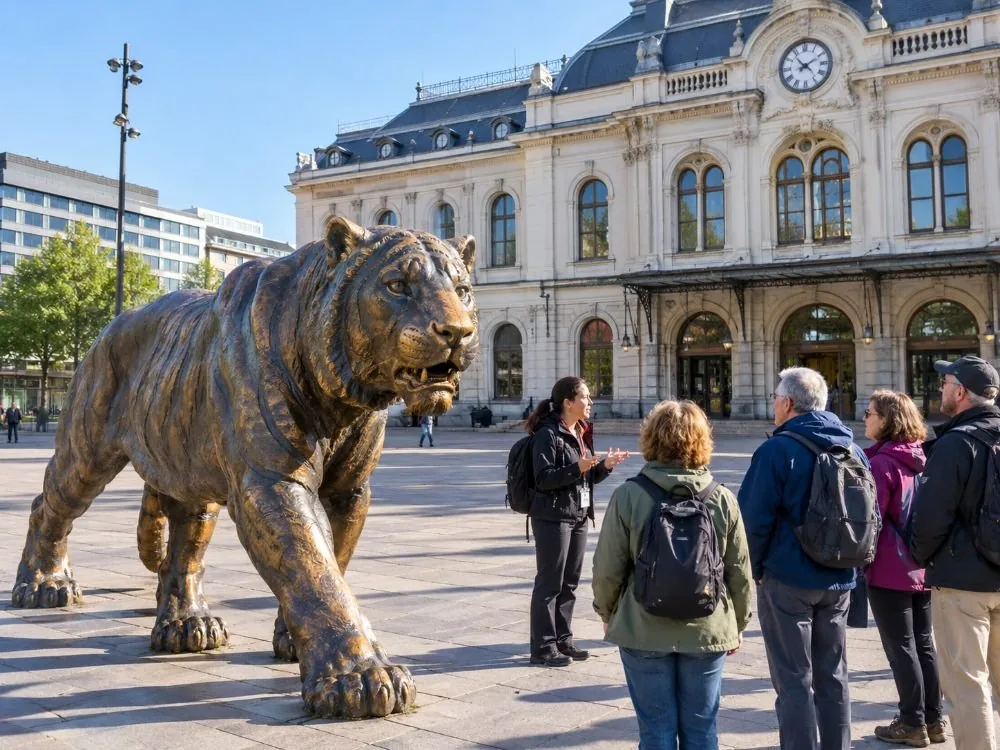 Most
reviewed by far
Oslo: Guided Walking Tour of Central Oslo with Local Guide
 English or German
Oslo: Best of Oslo Walking Tour
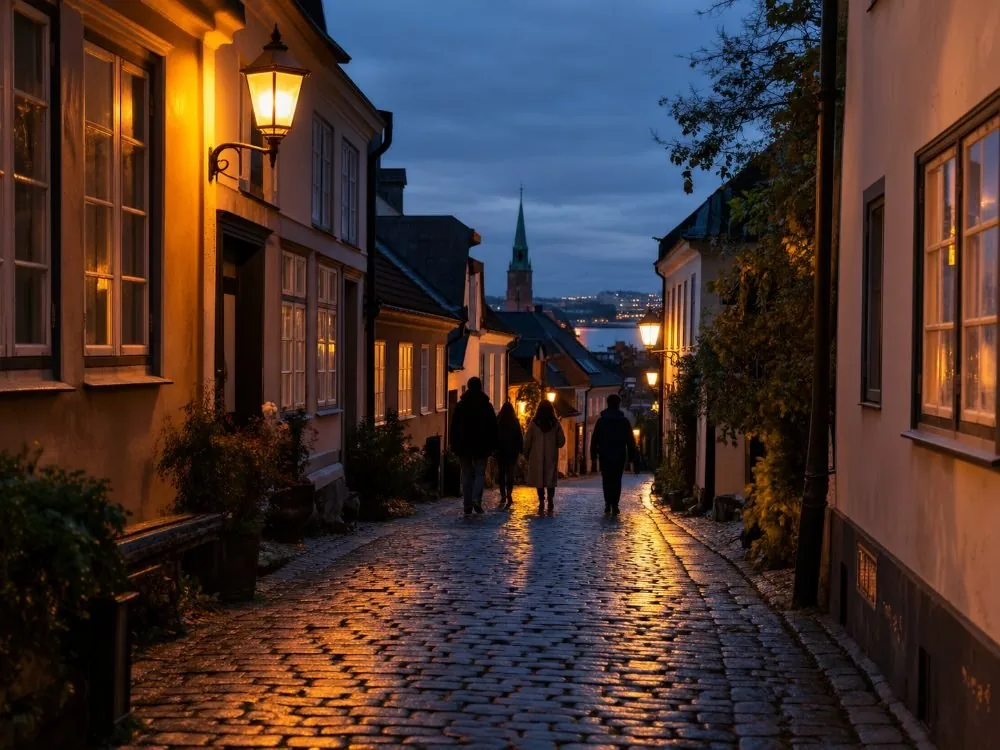 After
dark, ages 13+
Oslo: Historic Myths & Legends Evening Walking Tour
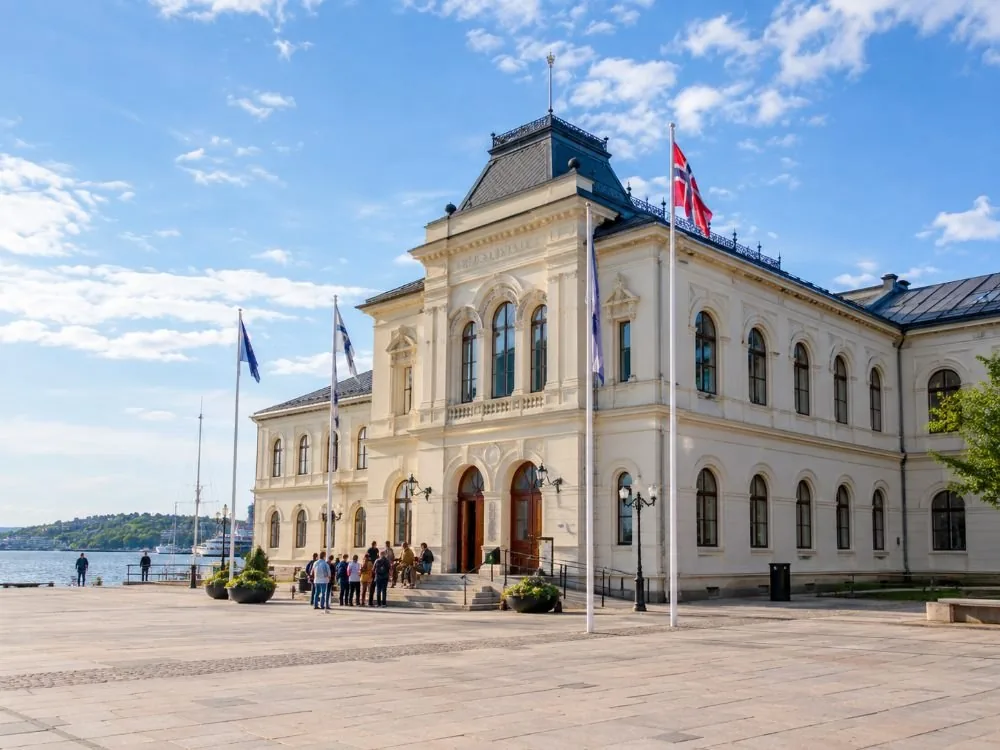 German language only
Oslo: City Highlights Walking Tour
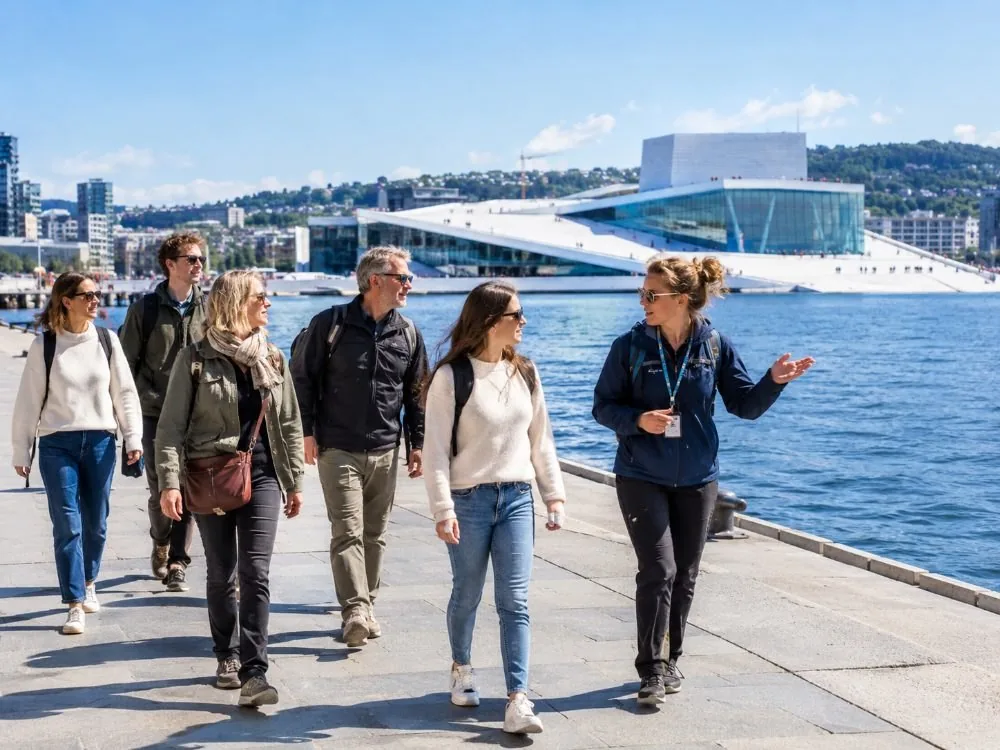 Shortest walk
Oslo: City Center Walking Tour
 Max 10,
shared or private
Oslo: City Walking Tour with Passionate Independent Guide
What walkers actually wrote
Straight from the operators’ GetYourGuide listings, one per walk. Read them next to the sample sizes: the ratings sit within a few tenths of each other, which sounds like a ranking and is really six numbers inside the same noise. What separates the walks is everything except the score.
Wonderful introduction to the major sites of central Oslo.
Exactly what I wanted.
We loved learning about some unique history and Norwegian lore.
Recommends taking this one in German, which he calls the best way to understand the history of the city.
Very enjoyable tour with interesting guide who knew lots about Oslo.
Like walking around town with an old friend.
Ratings and reviews are the operators’ live GetYourGuide figures. Read our full tour reviews ›
Four questions I get asked before every walk
Four questions, a paragraph each, from five winters on the tip-based walks and several years on the booked ones.
Is the free walking tour actually free?
No, and the people running it will tell you so themselves. “Free” describes the booking, not the transaction: you reserve a place, usually without handing over card details, and at the end the guide explains that this is how they are paid and you decide what the walk was worth. That is a real product and often a very good one — I did it for five winters — but it is not a gift, and the guide’s income depending on the group is what shapes the tour you get: bigger groups, more performance, and a clear explanation at the end. It is also not sold on the platform we link to, so nothing on this site can book you one. How the model works, and whether it is worth taking.
What is expected at the end of a booked walk?
On the most-reviewed of the six, nothing: that listing puts tips under “includes”, which settles the question before it comes up. The others do not say, and the honest answer is that Norwegian service work is not tip-dependent the way it is in some countries — tipping here is modest and discretionary rather than expected. Which is what makes the imported tip-based walking tour culturally odd in this city: a payment model that runs on an assumption Norway does not otherwise make. Nobody will chase you down Karl Johans gate. Tipping a guide in Norway.
Which of the six should I book?
Start with language, because it is the only one of these decisions you cannot fix on the day. One of the six is guided in German only despite an English title, and two others run in both languages but form up in different squares depending on which you booked. Then length: ninety minutes at the short end, up to three and a half hours at the long end, and the extra time mostly buys more standing still. Then group size, where only one walk publishes a cap at all. Rating comes last, because the six sit within a few tenths of each other on wildly different amounts of evidence. Which is best, properly answered, and what the longer walks do with the time.
Is a guide worth it when the centre is this small?
Sometimes not, and I would rather say so. The classic route is roughly a kilometre end to end, the ground is flat, the centre is signposted and English is widely spoken here, so walking it alone is entirely possible and asks nothing of you but a map. What you lose doing it alone is Kvadraturen, where the buildings do not explain themselves, and Bankplassen, and the reason the tiger is there at all. If you want the commentary, book a guide. If you want the transport, you do not need one. The honest balance, and why the centre is so compact.
Can’t make these dates?
Browse more available Oslo walking tours and find one that fits your schedule — all with instant confirmation and free cancellation.
Oslo walking tours, explained
Two different products are sold under the words “Oslo walking tour”. One is the tip-based walk, where nothing is fixed and the guide is paid by whatever the group decides at the end. The other is the ordinary booked walk with a fixed price, of which there are six worth comparing here — and four of those six walk the same kilometre. I guided the first kind for five winters off Karl Johans gate before I moved to the second, so I have been paid both ways, and neither one is the swindle people occasionally think it is.
The free walk is a booking model, not a gift
Nothing about the tip-based walk is hidden, but the word doing the work is doing it badly. You reserve a place, usually without card details, you turn up, you walk, and at the end the guide explains that this is how they are paid. What you give is your decision. That is not a free product; it is a product with no fixed price, and the difference matters because the guide’s income riding on the group shapes the walk you get. Bigger groups. More performance. A clearer pitch at the end than you would hear from someone already paid. I did it for five winters and I am not embarrassed about any of that, but I am not going to call it free either. It is also not sold on the platform this site links to, so nothing here can book you one; you go direct to the operator. The model in full, and whether it is worth your two hours.
There is one further oddity worth naming. Norwegian service work is not tip-dependent the way it is in some countries — tipping here is modest and discretionary rather than expected — so the tip-based walking tour is a payment model imported into a country that does not otherwise run on tips. It works anyway. It just sits at an angle to everything around it. What tipping a guide actually means here.

Four of the six walk the same kilometre
Put the published routes of the booked walks side by side and they collapse onto one line: Jernbanetorget and the bronze tiger, the Opera House, Christiania Torv and the grid of Kvadraturen, Akershus Fortress, Oslo City Hall on Fridtjof Nansens plass, Aker Brygge, Karl Johans gate, the Parliament, the University Aula, the Royal Palace. Roughly a kilometre end to end. Four of the six do that walk, a fifth does it in German, and only the evening walk has genuinely different material — the same streets after dark, told as folklore, Viking belief and crime rather than architecture, finishing around Bankplassen and its history of robberies. That one is for ages 13 and over, and it states that it is not suitable for people with mobility impairments and not wheelchair accessible.
So the itinerary is not what you are choosing between, whatever six different titles suggest. The comparison that actually separates them.
Language is the variable that can ruin your morning
One of the six, Oslo: City Highlights Walking Tour, is guided in German only. Its listing title is in English and it sits among the English walks looking almost exactly like them, which is how English speakers end up standing at the Nobel Peace Center understanding roughly every fifth word. It is a good walk. It is a good walk in German.
Two others run in either language, and here the trap is sharper: they meet in different places depending on which language you booked. One forms up in English at the University Aula on Karl Johans gate, by the P.A. Munch statue, and in German at the Nobel Peace Center, several minutes away on the other side of the centre. Turn up at the wrong one and you have not misread a detail, you have missed the walk. All five starting points, described, and the walks guided in German.
Length and group size do the rest
The six run from ninety minutes to three and a half hours over the same ground, so the extra time is not extra distance. It is more standing still: more stopping, more explaining, and on one walk an optional tram out to Vigeland Sculpture Park. The ninety-minute walk finishes at the Parliament rather than the palace, which is worth knowing if you had pictured the gates.
Group size changes a walking tour more than anything except the guide, and exactly one of the six publishes a cap: maximum ten guests, shared or private, on the walk that meets at the Skapning fra Iddefjord sculpture outside the Deichman Bjørvika library. The rest do not say. In a large group on a windy February square you will hear about half of it. Why the cap matters, and what the longer walks do with the time.
When a guide is worth it, and when it is not
The centre of this city is flat, compact, well signposted, and English is widely spoken in it. You can walk the whole classic route alone with a map in an afternoon, and plenty of people should. What you lose is Kvadraturen, where the buildings do not explain themselves, and the reason the tiger is standing outside the station at all, and the difference between a street named in 1852 and a parliament finished in 1866 sitting where two older streets were joined. If you want the commentary, book somebody. If what you wanted was to be taken from the station to the palace, you do not need a guide and I would rather say so. Walking it without one, and the honest balance sheet.
Frequently asked questions
Is there a free walking tour in Oslo?
Yes, and it is one of the most popular things a visitor does here — but it is a pricing model rather than a free product. There is no fixed price; you reserve a place, often without card details, and the guide is paid out of what the group gives at the end. It is not sold on the booking platform this site links to, so nothing here can book you one and we are not going to imply otherwise. You reserve it direct with the operator. The honest criticism is not that it is a swindle, because it is not: it is that “free” describes the booking rather than the transaction. The model, explained in full, and whether it is worth your two hours.
How much should I tip an Oslo walking tour guide?
There is no figure on this site, deliberately, and there is no figure you owe. Norwegian service work is not tip-dependent the way it is in some countries — tipping here is modest and discretionary rather than obligatory — which is exactly what makes the imported tip-based walking tour a strange fit for this city. On a tip-based walk the guide will explain at the end that this is how they are paid, and what you give is your decision. On a booked walk nothing is expected at all, and the most-reviewed of the six goes further and lists tips under “includes”. Tipping a guide in Norway, and where each walk stands on it.
How long is an Oslo walking tour?
Ninety minutes at the short end, three and a half hours at the long end, and four of the six run to two hours. The odd part is that they all cover roughly the same kilometre, so the extra time is not extra ground — it is more stopping, more explaining, and on one walk an optional tram ride out to Vigeland Sculpture Park. If you have a tight afternoon, the ninety-minute walk finishes at the Parliament rather than the Royal Palace, which is worth knowing before you picture the ending. What the longer walks do with the time, and how a walk fits into one day.
Is Oslo a walkable city?
Unusually so, in the centre, and that is the reason all these tours look alike. The classic route runs roughly a kilometre end to end, from the station up to the Royal Palace, on flat ground, and almost everything a first visit wants is strung along it: the Opera House, Kvadraturen, Akershus Fortress, the City Hall, Karl Johans gate, the Parliament. The compactness is a fact in the tours’ favour and against them at once — a short, dense, rewarding walk, and also one you could do alone with a map. Why the centre is so compact, and doing it without a guide.
Can you speak English in Oslo?
Yes. English is very widely spoken here and you will not struggle on a walking tour, in a shop or at a meeting point. The language trap runs the other way. Oslo: City Highlights Walking Tour is guided in German only, its listing title is in English, and it sits on the same page as the English walks looking almost identical to them — so English speakers book it by accident and work that out at the meeting point. Two other walks run in either language but meet in different places depending on which you chose. English in Oslo, and the walks guided in German.
What is the best walking tour company in Oslo?
We do not name one, and I would be suspicious of a site that did. The six booked walks sit within a few tenths of each other, which reads like a ranking until you look at what is holding each number up: the top score rests on one of the smallest samples on the site, and the most-reviewed walk carries a slightly lower one. Those are not the same claim, and the spread is inside the noise. The lowest-rated of the six is also the most bundled, which is the likeliest explanation — more included means more that can go wrong. The useful question is not which company, it is which language, which length and which group size. Best, answered properly, and every walk reviewed one by one.
What should I not miss in Oslo on a walking tour?
On the route itself: Christiania Torv and the grid of Kvadraturen around it, which is the stretch that needs a guide most; the Akershus Fortress grounds, free to walk through and open daily; and the stretch of Karl Johans gate between the Parliament and the palace, which the shortest walk of the six does not finish. Just off it, Vigeland Sculpture Park is a tram ride away and only one walk offers it as an option. Bankplassen and its history of robberies is on the after-dark walk and almost nothing else. The full list, and the route stop by stop.
Is an evening walking tour in Oslo actually dark?
It depends entirely on the month, because Oslo sits at about 59.9 degrees north and the swing between midsummer and midwinter is very large. Book the Myths and Legends evening walk in June and you will hear ghost stories in broad daylight; book the same walk in December, when the useful light is a short window in the middle of the day, and it is genuinely dark. It is the only one of the six with different material rather than a different length — folklore, Viking belief and crime instead of architecture. Note that it is for ages 13 and over, and it states that it is not suitable for people with mobility impairments and not wheelchair accessible. The after-dark walk, and walking Oslo in the dark half of the year.
Still have questions? Email us [email protected]