Oslo walking tours, explained
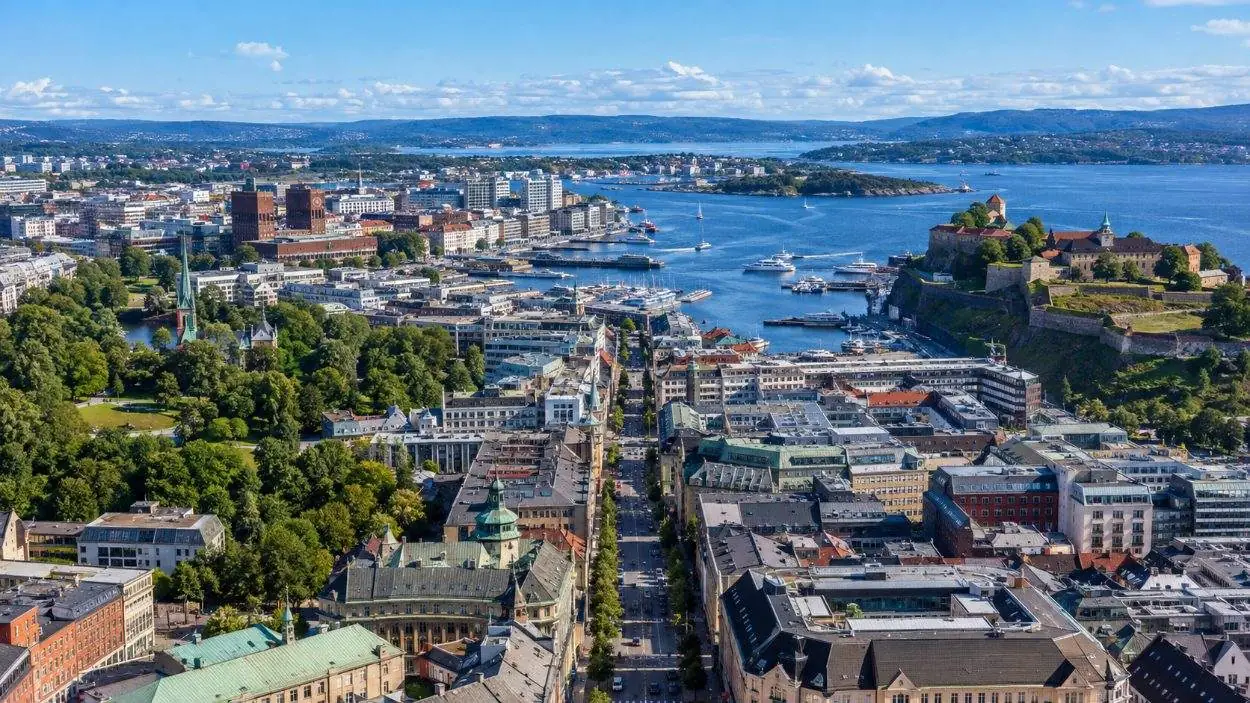
Almost every guided walk in Oslo covers the same central kilometre, from the Opera House and Kvadraturen past Akershus Fortress and the City Hall, then up Karl Johans gate to the Royal Palace. The route is not what you are choosing between. The language it is guided in, how long it runs, how many people are on it, where it meets, and whether anyone expects money at the end — those are the real variables.
Two different products are sold under the words “Oslo walking tour”. One is the tip-based walk, where nothing is fixed and the guide is paid by whatever the group decides at the end. The other is the ordinary booked walk with a fixed price, of which there are six worth comparing here — and four of those six walk the same kilometre. I guided the first kind for five winters off Karl Johans gate before I moved to the second, so I have been paid both ways, and neither one is the swindle people occasionally think it is.
The free walk is a booking model, not a gift
Nothing about the tip-based walk is hidden, but the word doing the work is doing it badly. You reserve a place, usually without card details, you turn up, you walk, and at the end the guide explains that this is how they are paid. What you give is your decision. That is not a free product; it is a product with no fixed price, and the difference matters because the guide’s income riding on the group shapes the walk you get. Bigger groups. More performance. A clearer pitch at the end than you would hear from someone already paid. I did it for five winters and I am not embarrassed about any of that, but I am not going to call it free either. It is also not sold on the platform this site links to, so nothing here can book you one; you go direct to the operator. The model in full, and whether it is worth your two hours.
There is one further oddity worth naming. Norwegian service work is not tip-dependent the way it is in some countries — tipping here is modest and discretionary rather than expected — so the tip-based walking tour is a payment model imported into a country that does not otherwise run on tips. It works anyway. It just sits at an angle to everything around it. What tipping a guide actually means here.
Four of the six walk the same kilometre
Put the published routes of the booked walks side by side and they collapse onto one line: Jernbanetorget and the bronze tiger, the Opera House, Christiania Torv and the grid of Kvadraturen, Akershus Fortress, Oslo City Hall on Fridtjof Nansens plass, Aker Brygge, Karl Johans gate, the Parliament, the University Aula, the Royal Palace. Roughly a kilometre end to end. Four of the six do that walk, a fifth does it in German, and only the evening walk has genuinely different material — the same streets after dark, told as folklore, Viking belief and crime rather than architecture, finishing around Bankplassen and its history of robberies. That one is for ages 13 and over, and it states that it is not suitable for people with mobility impairments and not wheelchair accessible.
So the itinerary is not what you are choosing between, whatever six different titles suggest. The comparison that actually separates them.
Language is the variable that can ruin your morning
One of the six, Oslo: City Highlights Walking Tour, is guided in German only. Its listing title is in English and it sits among the English walks looking almost exactly like them, which is how English speakers end up standing at the Nobel Peace Center understanding roughly every fifth word. It is a good walk. It is a good walk in German.
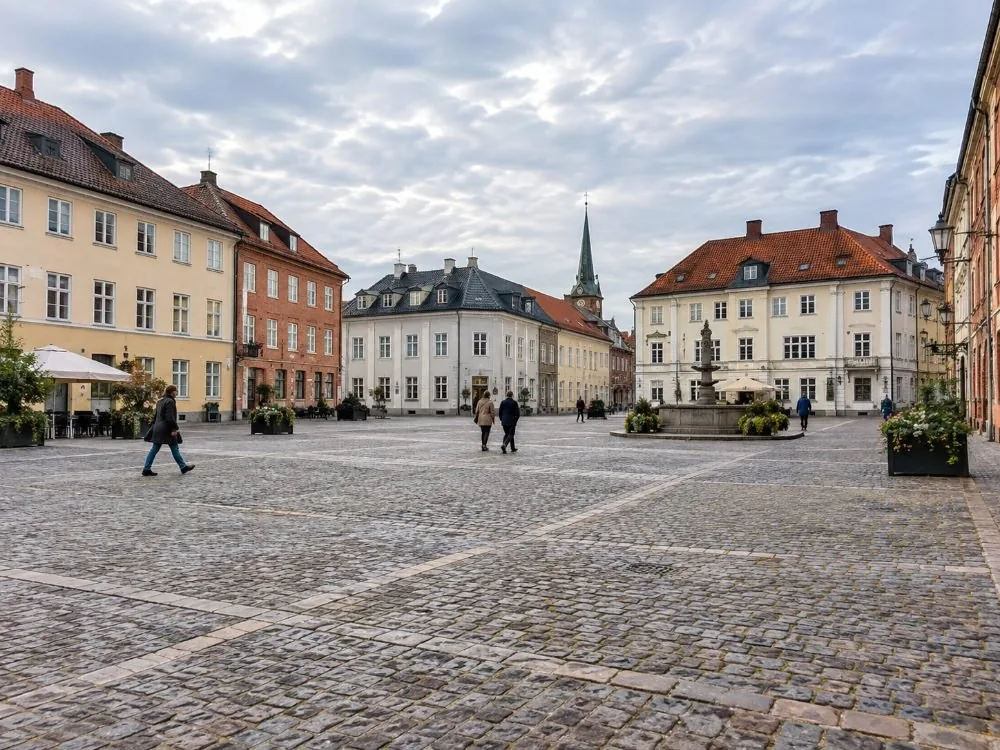
Two others run in either language, and here the trap is sharper: they meet in different places depending on which language you booked. One forms up in English at the University Aula on Karl Johans gate, by the P.A. Munch statue, and in German at the Nobel Peace Center, several minutes away on the other side of the centre. Turn up at the wrong one and you have not misread a detail, you have missed the walk. All five starting points, described, and the walks guided in German.
Length and group size do the rest
The six run from ninety minutes to three and a half hours over the same ground, so the extra time is not extra distance. It is more standing still: more stopping, more explaining, and on one walk an optional tram out to Vigeland Sculpture Park. The ninety-minute walk finishes at the Parliament rather than the palace, which is worth knowing if you had pictured the gates.
Group size changes a walking tour more than anything except the guide, and exactly one of the six publishes a cap: maximum ten guests, shared or private, on the walk that meets at the Skapning fra Iddefjord sculpture outside the Deichman Bjørvika library. The rest do not say. In a large group on a windy February square you will hear about half of it. Why the cap matters, and what the longer walks do with the time.
When a guide is worth it, and when it is not
The centre of this city is flat, compact, well signposted, and English is widely spoken in it. You can walk the whole classic route alone with a map in an afternoon, and plenty of people should. What you lose is Kvadraturen, where the buildings do not explain themselves, and the reason the tiger is standing outside the station at all, and the difference between a street named in 1852 and a parliament finished in 1866 sitting where two older streets were joined. If you want the commentary, book somebody. If what you wanted was to be taken from the station to the palace, you do not need a guide and I would rather say so. Walking it without one, and the honest balance sheet.
Ready to book?
If you have read this far and still want a guide beside you, start with the most-reviewed walk and work out from there. If you would rather compare the six side by side first, the comparison table sets them out on language, length, group size and meeting point, and the free walking tour page explains the other product properly.
Frequently asked questions
Do all Oslo walking tours cover the same route?
Four of the six do, near enough. The Opera House, Christiania Torv and Kvadraturen, Akershus Fortress, the City Hall, Karl Johans gate, the Parliament and the Royal Palace turn up on almost every published itinerary. The evening myths and legends walk is the exception, and it is guided in English, for ages 13 and over, and is not wheelchair accessible. See the route, stop by stop.
Is a guided walk worth it when the centre is this small?
That is the honest question, and the answer depends on what you want. The walking is easy and you could do it alone with a map. What you are paying for is the commentary, not the transport. The longer answer is here.
Which walk should I book?
Start from language and length rather than from the ratings, which sit inside the noise. One of the six is guided in German only, and two meet in different places depending on the language you booked. How to choose goes through it.